Dear Students! I have created a blogg for your ease where you can find any book related to Physics.Now, You will download any Book of Physics just one click.
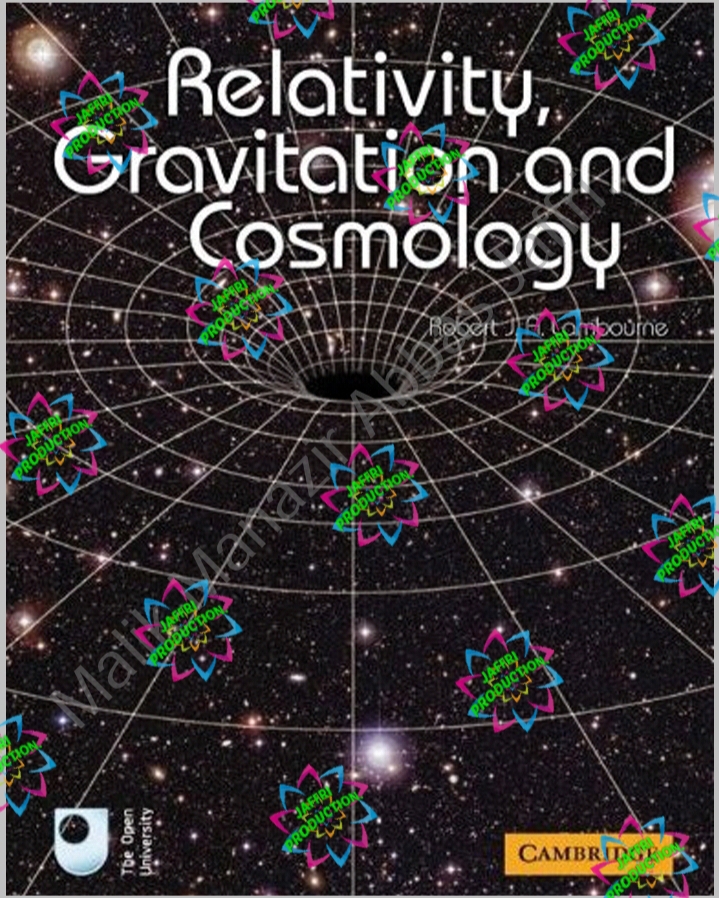
To Download Relativity Gravitation and Cosmology
Dear Students! I have created a blogg for your ease where you can find any book related to Physics.Now, You will download any Book of Physics just one click.
To Download Relativity Gravitation and Cosmology
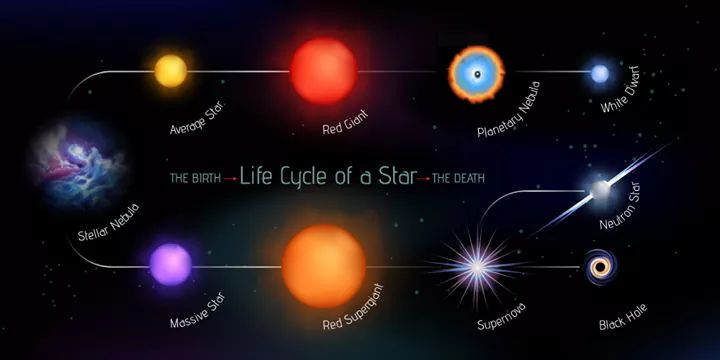
Stellar Evolution – The Birth, Life, and Death of a Star:
The Milky Way Galaxy contains several hundred billion stars of all ages, sizes and masses. A typical star, such as the Sun, radiates small amounts of X-rays continuously and larger bursts of X-rays during a solar flare.
The Sun and other stars shine as a result of nuclear reactions deep in their interiors. These reactions change light elements into heavier ones and release energy in the process. The outflow of energy from the central regions of the star provides the pressure necessary to keep the star from collapsing under its own weight.
A star collapses when the fuel is used up and the energy flow from the core of the star stops. Nuclear reactions outside the core cause the dying star to expand outward in the “red giant” phase before it begins its inevitable collapse.
If the star is about the same mass as the Sun, it will turn into a white dwarf star. If it is somewhat more massive, it may undergo a supernova explosion and leave behind a neutro
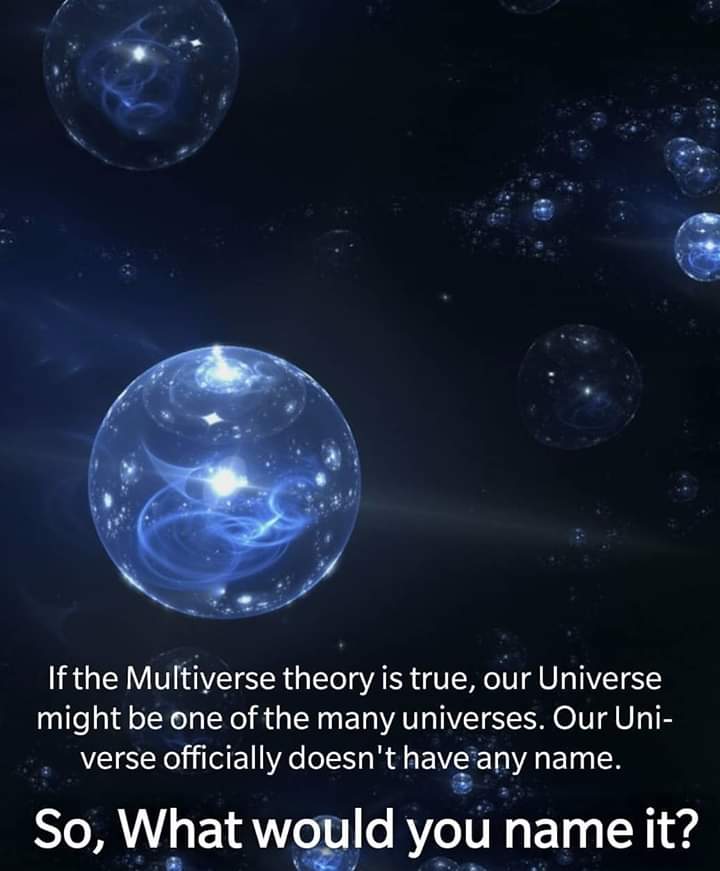
The multiverse also known as omniverse or meta-verse, is a hypothetical group of multiple universes. Together, these universes comprise everything that exists: the entirety of space, time, matter, energy, and the physical laws and constants that describe them.The different universes within the multiverse are called “parallel universes”, “other universes”, or “alternate universes”.
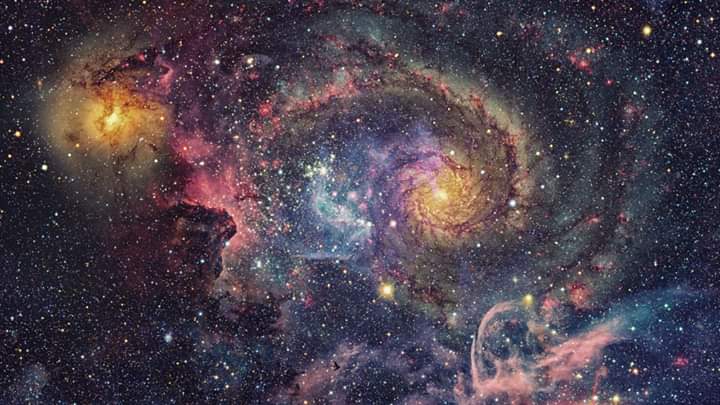
A nebula is a cloud of gas and dust in interstellar space. Every nebula contains hydrogen and helium, plus a mixture of other gases. There are several types of nebulae (plural of “nebula): molecular clouds (also known as HII regions because they are mainly hydrogen), dark nebulae, supernova remnants, and planetary nebulae. Our galaxy has many nebulae, and astronomers have found these clouds in other galaxies, as well.
Types of Nebulae:
HII regions and dark nebulae are where stars can form. They are made mostly of hydrogen and helium, with traces of other gases and infusions of dust grains. hey are found largely in the spiral arms of our galaxy. Our own solar system was born in such a region more than 4.5 billion years ago. The best-known molecular clouds are the Orion Nebula, the Eta Carinae Nebula, The Eagle Nebula (also, known as the Pillars of Creation), the Tarantula Nebula in the Large Magellanic Cloud, the Horsehead Nebula, the Coal Sack, and the Lagoon Nebula. Most of them, except for the Coal Sack, a
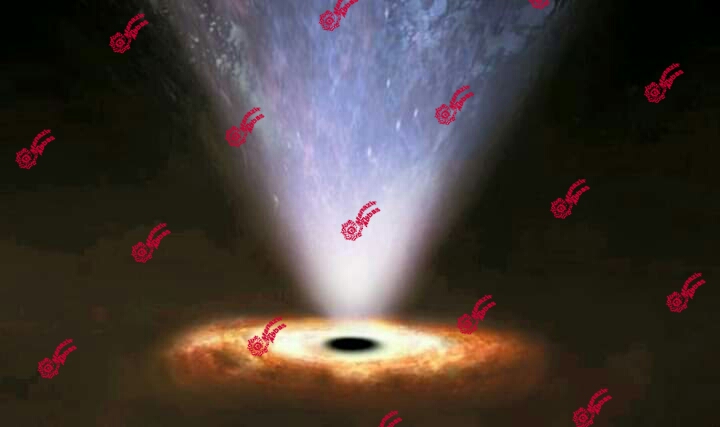
Our universe is an amazing & unique comprehensive physical & chemical system.
You can see planets rotates around the sun in specific curved path.
That behavior was also found in sub-atom scale system (electrons of atom)
Maybe also the Quarks have the same behavior. Scientists now believe there are three classifications of truly elementary particles: Leptons, Quarks, and Field Particles.
Definitely, the governed laws of both (i.e. planets & electrons) are different, but it has the same action.
I have noticed that light with Black hole has the same behavior similar to what it has been known in aerodynamics science as #Coanda_Effect.
I have mentioned few questions which (if it’s true) will let us to rethink about light & maybe one day we can invent a system contains a black hole in home.
Link of Post No.17:
https://scientistmohamed.wordpress.com/2019/07/26/is-there-a-relationship-between-black-hole-with-coanda-effect/
–
Enjoy storming your mind & Have a big fun
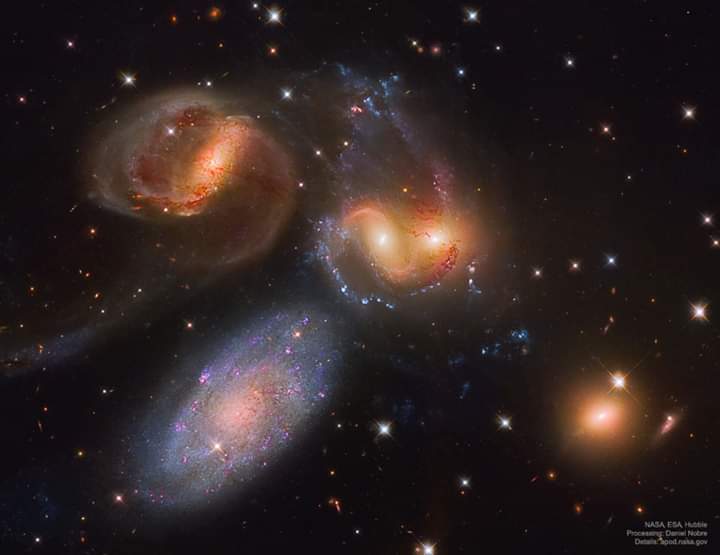
Stephen’s Quintet Galaxies
Four of the five of the Stephen’s quintet galaxies toward the Constellation Winged Horse or Pegasus, are locked in a cosmic dance of repeated close encounters over 300 million light years away. The interacting galaxies are NGC 7319, 7318B, 7318A and 7317 (left to right) . they appear to have distorted loops and tails, grown under the influence of disruptive gravitational tides. The mostly blueish galaxy, the large NGC7320 (lower left) in the foreground is about 40 million light years distant and is not part of the interacting group. (Davis K. Thanjan)
Image: NASa, ESA, Hubble, Daniel Nobre.
Hubble Snaps a Galactic Potpourri of Particles
Every now and then, the NASA/ESA Hubble Space Telescope glimpses a common object — say, a spiral galaxy — in an interesting or unusual way. A sharply angled perspective, such as the one shown in this Hubble image, can make it seem as if we, the viewers, are craning our necks to see over a barrier into the galaxy’s bright center.
In the case of NGC 3169, this barrier is the thick dust embedded within the galaxy’s spiral arms. Cosmic dust comprises a potpourri of particles, including water ice, hydrocarbons, silicates and other solid material. It has many origins and sources, from the leftovers of star and planet formation to molecules modified over millions of years by interactions with starlight.
NGC 3169 is located about 70 million light-years away in the constellation of Sextans (the Sextant). It is part of the Leo I Group of galaxies, which, like the Local Group that houses our home galaxy, the Milky Way, is part of a larger galactic congregation known as t
 Books of Physics